Hiking for Beginners: What to Bring on Your First Day
Plan a comfortable first hike with a sensible route, simple layers, enough water and a small safety margin.
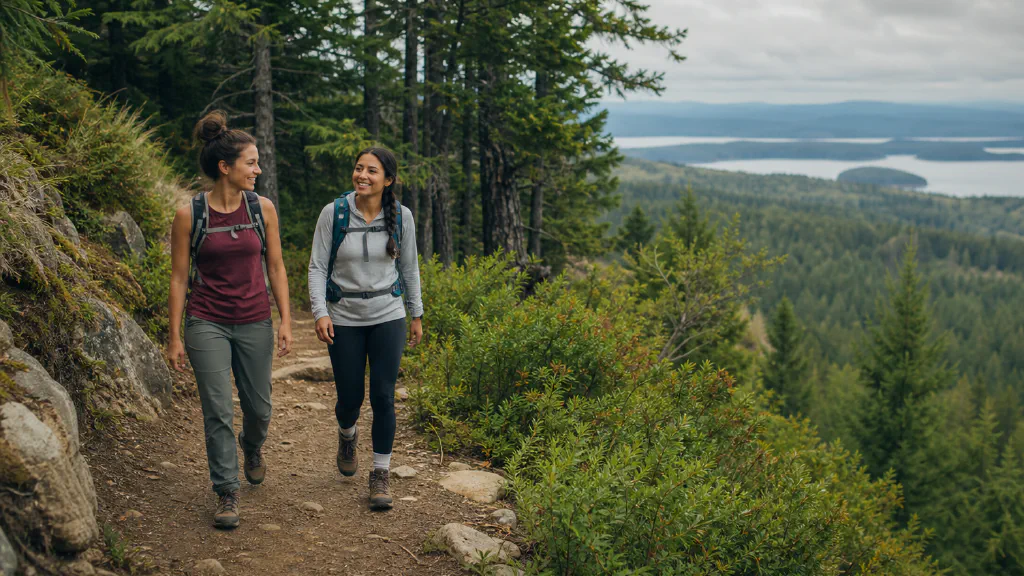
A first hike does not need a dramatic summit. A marked local trail, a comfortable pace and enough time to stop and look around can give you the best parts of hiking without turning the day into a logistics exercise.
The main skill is not owning equipment. It is matching the route and conditions to your current experience.
Pick a forgiving route
Distance alone does not describe a hike. Elevation, loose ground, heat, navigation and the return journey all change the effort. For your first outing, look for a maintained route with clear waymarks, phone coverage and an obvious turnaround point.
Read recent trail information from the land manager or park authority. Check whether bridges, paths or public transport are affected. Save the route offline and tell someone where you plan to go.
The simple first-hike packing list
For a short, fair-weather day hike, carry:
- water in a bottle you can reach easily;
- a snack with some carbohydrate and salt;
- a charged phone and offline map;
- a light rain shell or extra warm layer;
- sun protection appropriate to the conditions;
- a small personal first-aid kit;
- any medication you normally require;
- a small bag for your rubbish.
This should fit in a modest daypack. Heavy “just in case” items can make the day less comfortable, but do not remove essentials simply to make the bag look minimal.
Clothing and footwear
Wear layers that can be added or removed without unpacking everything. Cotton can remain damp after sweat or rain; a quick-drying top and a weather-resistant outer layer are usually more comfortable.
On dry, smooth trails, well-fitting walking shoes or trail shoes may be enough. Prioritize grip, comfort and a secure heel. New footwear should be worn on shorter walks before a full day out.
Water, food and pace
Water needs vary with temperature, humidity, effort and the person. Bring more than you expect to drink, particularly if the route has no verified water source. Do not assume clear-looking natural water is safe.
Start more slowly than your city walking pace. Short steps on climbs save energy, and controlled steps on descents protect balance. Take a brief break before you feel depleted.
Make a turnaround decision
Set a time at which you will turn back even if you have not reached the planned viewpoint. Weather, daylight, confidence and group energy are all valid reasons to shorten the route.
Turning around is ordinary outdoor judgment, not a failed hike.
Leave the trail as you found it
Stay on durable marked surfaces, carry out waste, keep noise low and follow local rules for dogs, fires and protected areas. Give wildlife space and avoid shortcuts that widen the trail.
After the hike, note what you used and what you wished you had. Your next packing list will be more useful because it is based on your own day—not somebody else’s expedition.
This article offers general information, not medical advice. Adjust activity to your experience and seek qualified guidance when needed.
FAQ
Do beginners need hiking boots?
Not always. Supportive shoes with reliable grip can work on dry, maintained paths. Boots become more useful on rough, wet or cold terrain.
How long should a first hike be?
For many adults, 60 to 120 minutes on an easy marked route is enough to learn without creating an exhausting day.