Folding vs Upright vs Recumbent: The Best Exercise Bike for a Small Apartment
Choosing the best exercise bike for a small apartment comes down to more than floor space. Compare folding, upright, recumbent and slim indoor bikes for storage, comfort, mounting

For most beginners, the best exercise bike for a small apartment is a folding bike if you need the room back after every session, or a compact upright bike if you can give it a permanent corner. Choose a recumbent only when easy access and back support matter more than storage, and choose a slim magnetic indoor bike when quiet, regular riding matters more than folding it away.
The important distinction is not simply “small” versus “large”. A bike can have a modest footprint while being difficult to carry, too tall to store, awkward to mount in a tight space or noisy enough to make evening rides stressful. Before looking at resistance levels and screens, decide where the bike will live during a workout, where it will go afterwards and how you will get it there.
Start with the room, not the product photo
Measure the clear rectangle available with doors open and furniture in its normal position. Then measure the route from that spot to storage: narrow hallways, thresholds, rugs and tight turns can matter more than the bike’s stated footprint. Leave room to step on and off safely rather than placing a pedal or handlebar directly against a wall.
Also look upward. An upright or indoor cycling bike can require more ceiling clearance than its floor size suggests, particularly for taller riders or anyone who rises from the saddle. A folding frame reduces the storage size, but handlebars, console arms and stabiliser bars may still protrude. A recumbent is lower, yet its frame commonly extends much farther into the room.
A simple rule helps: if you will move the bike after nearly every ride, favour light handling and a reliable folding or rolling process. If it will stay put, favour stability, adjustment range and a riding position you will actually use.
Folding exercise bikes: best when the floor must stay flexible
Folding exercise bikes are the practical answer for a studio, shared living room or bedroom that changes purpose throughout the day. Their main advantage is not always a dramatically smaller in-use footprint; it is the ability to reduce their stored width or length after exercise. That can make the difference between cycling regularly and avoiding the equipment because it is in the way.
They are usually built around an upright, seated position, often with a simpler frame and lighter flywheel than a full indoor cycle. For a beginner doing steady rides, that can be perfectly adequate. The limitations tend to appear when you want a very planted feel during hard efforts, extensive handlebar positions or a bike that tolerates frequent aggressive standing pedalling. Folding joints can also add a setup step, so check that the lock feels secure and that you are comfortable operating it.
Transport wheels are helpful, but do not assume they make every bike effortless. Most work by tilting the bike onto wheels at one end. You need enough space to tip it, steer it and park it vertically or horizontally. A thick exercise mat can reduce vibration, though it may also make rolling more difficult.
Choose a folding bike when clearing space is non-negotiable. Avoid buying solely because it folds if you expect long, high-intensity rides several times a week and have room for a sturdier non-folding option.
Compact upright bikes: the strongest all-round apartment choice
A compact upright bike is often the sensible middle ground. It generally has a smaller visual and physical presence than a recumbent or air bike, while offering a more conventional cycling posture than many basic folding models. If it can remain beside a wall, desk or television unit, it removes the friction of unfolding and repositioning equipment before each session.
The trade-off is that it is not truly invisible. You need a permanent footprint, including a little clearance around the pedals and seat. Mounting can also be more demanding than on a recumbent: you usually swing a leg over the frame or step through a limited gap. This is manageable for many people, but worth testing mentally in a cramped room, especially if flexibility or balance is a concern.
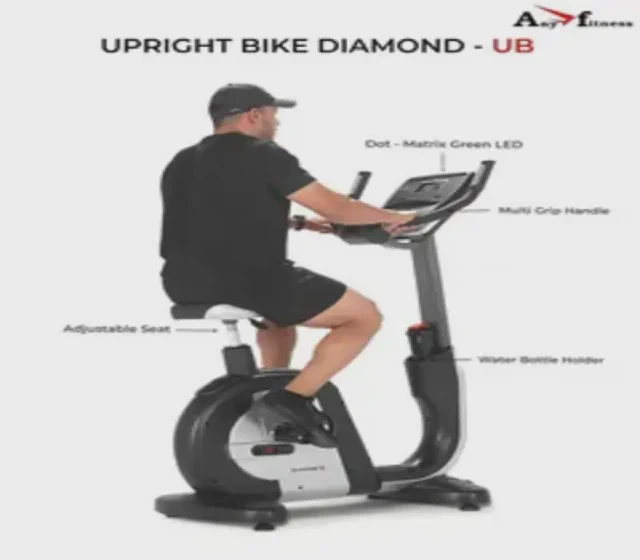
This Made-in-China supplier listing from Huizhou Yuchi Technology Co., Ltd. is presented as a gym upright bike. For apartment shoppers, it is a useful reminder that an upright format can be space-efficient without being a folding model: it tends to occupy a concentrated floor area, but still needs a fixed parking place and clear access for mounting.
Best for People who can keep a bike in one corner and prefer a conventional seated cycling position.
- Listed in the Exercise Bike category
- Upright bike format
- Supplier listing from Huizhou Yuchi Technology Co., Ltd.
Confirm before inquiry: The listing information provided does not state dimensions, resistance type, folded size, transport-wheel details or price. Confirm those points directly before treating it as a small-apartment option.
An upright format is especially useful for relaxed endurance rides, moderate intervals and building a habit. Look for enough seat-height adjustment to achieve a comfortable pedal stroke, stable feet or levellers for an uneven floor, and controls you can reach without twisting. If you share walls or floors, a magnetic-resistance model is often worth prioritising for quieter riding; secure assembly and a mat still matter because structure-borne vibration can travel.
Recumbent bikes: easier entry, difficult storage
A recumbent exercise bike places you in a chair-like seat with back support and pedals in front of you. That lower, step-through approach can feel more approachable for a beginner who dislikes climbing onto a high saddle. It can also be more comfortable for longer easy sessions because the seat spreads pressure differently from a small upright saddle.
But recumbents are usually the least apartment-friendly format when every square metre counts. The long rail and rear seat make them hard to tuck into a narrow corner. Even models with wheels need a clear, longer path to roll. Their low height may allow them to sit beneath some visual sightlines, but they can block walking routes more readily than a tall, narrow upright.
Consider one if comfort, supported seating and easy mounting will determine whether you use the bike. Skip it if your only workable location is a passageway or if you must store it in a cupboard after every ride.
Slim magnetic indoor bikes: quiet and capable, but rarely foldable
Slim magnetic indoor bikes, sometimes called spin-style bikes, are designed around a more direct cycling feel: a weighted flywheel, closer handlebar access and potentially a wider range of riding positions. Magnetic resistance is a strong fit for apartments because it can deliver progressive resistance without the pronounced fan noise of an air bike.
Their narrow frame can be deceptive. They may take up little width, but they are often longer than a simple upright and need additional height and clearance to mount. The saddle is typically higher, and riding out of the saddle demands stability. These bikes are usually best left assembled in a dedicated spot, even if transport wheels allow occasional repositioning.
If you enjoy a purposeful training position and plan to ride often, a slim magnetic bike can be more satisfying than a folding model. Make sure its handlebars, saddle and pedals suit your current mobility rather than buying for an imagined future fitness level.
Where air bikes fit—and why they are a specialist choice
Air bikes use a fan to create resistance, becoming harder as you pedal and, on many designs, push and pull the handles. They are excellent for short, demanding whole-body intervals, but they are rarely the obvious answer to a noise-sensitive apartment. The fan creates an audible rush of air, and hard efforts may make the machine shift or transmit vibration if the floor is not level.
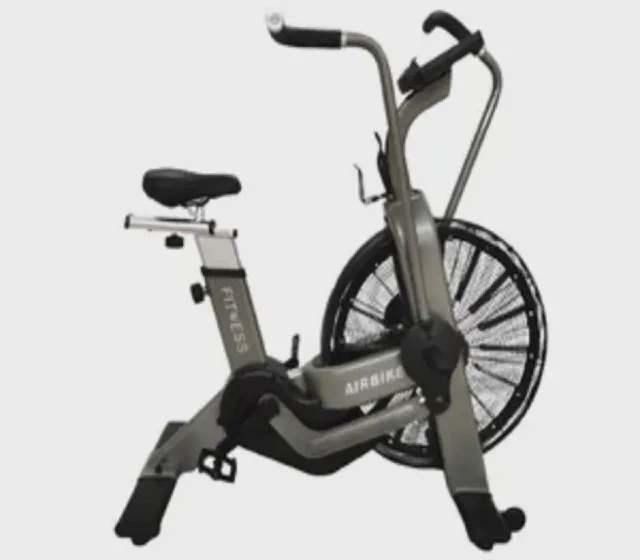
New Design Cardio Fitness Equipment Wind Resistance Spinning Air Exercise Bike
- MIC category
- Exercise Bike
This listing is described as a wind-resistance spinning air exercise bike from Shandong Savo Technology Fitness Equipment Co., .... An air bike may be appealing if you want hard intervals and resistance that rises as you pedal harder. It is less naturally suited to close-quarters, quiet living than a compact magnetic bike: the fan creates airflow and audible resistance, while the robust frame and moving handles can make the machine feel visually and physically larger.
Best for Apartment residents prioritising high-effort cardio in a room where exercise noise is unlikely to disturb others.
- Listed in the Exercise Bike category
- Wind-resistance air-bike description
- Spinning-style exercise-bike format
Confirm before inquiry: No dimensions, noise rating, storage configuration, transport-wheel specification or price were supplied with the listing details. Measure both the ride area and the route to storage before considering this format.
That does not make an air bike unsuitable. It simply makes the buying decision more specific. It suits someone with a reliable workout area, tolerant neighbours or daytime training hours, and a clear preference for intense intervals over quiet, easy spins. It is a poor compromise if you mainly need discreet evening exercise in a multipurpose living space.
A note on listing accuracy and buying checks
Category pages can contain unexpected products, so verify the individual listing, product type and specifications before comparing options. The following supplied listing is titled as a motorised treadmill rather than an exercise bike, despite appearing in an Exercise Bike category inventory.
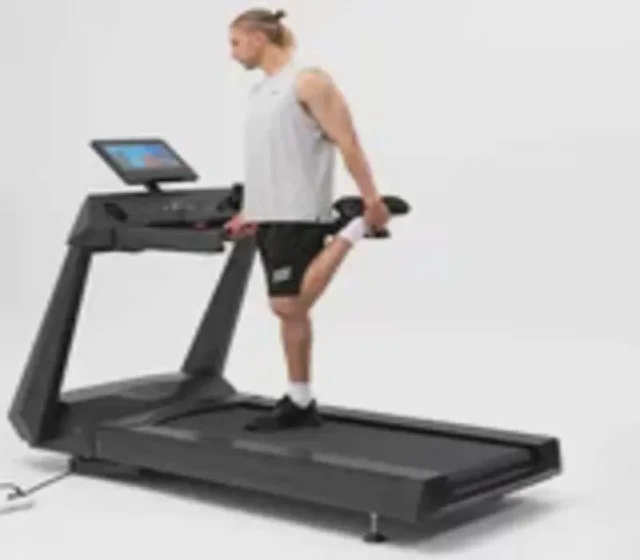
AC Motor Exercise Incline Motorized Sport Running Fitness Gym Treadmill Machine
- Displayed price
- US$ 930-950 / Piece
- MIC category
- Exercise Bike
Although this product appeared in the supplied Exercise Bike category inventory, its supplier title identifies it as an AC-motor incline motorised treadmill from All Universe Fitness Technology (Qingdao) Co., Ltd. It should not be compared as a bike choice. For a small apartment, it instead illustrates why shoppers should read the individual product title and specifications rather than relying on category placement alone.
Best for Not applicable to a buyer seeking an exercise bike.
- Supplier listing identifies a motorised incline treadmill
- Displayed price: US$ 930-950 / Piece
- Supplier listing from All Universe Fitness Technology (Qingdao) Co., Ltd.
Confirm before inquiry: This is not an exercise-bike recommendation. The displayed price is a supplier-listing claim and should be confirmed with the supplier alongside all specifications and purchase terms.
For any bike, ask for the assembled dimensions, folded dimensions where relevant, product weight, user-weight limit, seat-adjustment range, resistance system, transport-wheel placement and power requirements. Confirm whether the bike arrives partly assembled, as apartment assembly can be difficult without floor space. Check your building’s practical constraints too: delivery access, lift size and a safe place to unpack are not minor details.
Finally, prioritise a stable, repeatable setup over an impressively compact specification. A bike that takes two minutes to roll out, adjust and use is more likely to become part of your week than one that technically fits but is awkward every time. If you have joint pain, balance concerns, cardiovascular symptoms or a medical condition that could affect exercise, speak with an appropriately qualified health professional before beginning or intensifying an indoor cycling routine.
This article offers general information, not medical advice. Adjust activity to your experience and seek qualified guidance when needed.
FAQ
What is the best exercise bike for a small apartment?
A folding bike is generally the best choice when you must clear the floor after every workout. If you have a dedicated corner, a compact upright bike is usually the better everyday compromise between size, stability and riding position.
Do transport wheels make an exercise bike easy to store?
They help, but only on a suitable route. Wheels are most useful on hard, level flooring with enough turning space. A bike may still be awkward to move over thick rugs, thresholds, stairs or a crowded room, especially if the wheels are at only one end.
Are recumbent bikes suitable for small spaces?
They can suit a small apartment only when they have a permanent place. Their seat may be more comfortable and easier to access, but the long, low frame usually occupies more floor length than a folding or upright bike.
Which exercise bike is quietest for apartment use?
A bike using magnetic resistance is commonly a practical choice for quieter indoor riding because it does not rely on a fan for resistance. Noise also comes from pedalling, loose parts, flooring and vibration, so use a stable surface and a protective mat where appropriate.
How much room should I allow around an exercise bike?
Use the manufacturer's in-use dimensions as the starting point, then allow safe clearance to mount, dismount and adjust the seat. Also account for handlebar swing, a door opening into the area, and enough access to roll or fold the bike away.