Best Compact Fitness Accessories for a Small-Home Workout Space
Compare resistance bands, suspension trainers, ab rollers and push-up bars for storage, comfort, exercise variety and beginner-friendly home workouts.
If you have limited room, start with resistance bands unless you already know you prefer bodyweight training. They take almost no storage space, support pulling and pressing movements, and can make a short workout feel varied without turning one corner of your home into a gym.
The other strong options are a suspension trainer, an ab roller and push-up bars. Each solves a different problem: the suspension trainer offers the broadest bodyweight exercise menu, the ab roller is the smallest and most focused, and push-up bars are the simplest way to make pressing exercises more comfortable for some wrists. The right choice depends less on the product’s footprint than on how you will set it up and use it.
Quick comparison
| Accessory | Storage | Learning curve | Exercise variety | Comfort considerations | Best starting point |
|---|---|---|---|---|---|
| Resistance bands | Excellent | Low to moderate | High | Handles and band tension affect comfort | Most beginners |
| Suspension trainer | Very good | Moderate | Very high | Grip, shoulders and anchor point matter | Confident beginners |
| Ab roller | Excellent | High | Low to moderate | Knees, shoulders and lower back need control | Focused core training |
| Push-up bars | Very good | Low | Low to moderate | May allow a more neutral wrist position | Push-up practice |
1. Resistance bands: the most adaptable first purchase
Resistance bands are the safest bet when you want one small accessory to cover several types of training. Depending on the style, you can use them for rows, presses, squats, hinges, lateral steps, shoulder work and assisted mobility exercises. Long loop bands are especially useful for larger movements, while handled tubes can feel more familiar for pressing and rowing.
They also store well. A small bag, drawer or shelf is usually enough, and there is no heavy frame to move before or after a session. That matters in a living room or bedroom where equipment must disappear quickly.
The trade-off is that band resistance is not always easy to measure. Stretching a band farther increases its challenge, but the resistance changes through the movement. Bands can also snap back if they are damaged or poorly anchored. Inspect them regularly, keep them away from sharp edges and avoid standing on a band unless it is designed for that use.
For a beginner, choose several resistance levels rather than one band that feels difficult immediately. That gives you room to progress while keeping lighter options for warm-ups and smaller muscle groups.
2. Suspension trainers: the widest exercise menu in the smallest bag
A suspension trainer uses adjustable straps and handles to turn bodyweight movements into rows, squats, presses, lunges and core exercises. By changing your body angle, you can often make an exercise easier or harder without adding plates or bulky equipment. It can therefore offer more variety than its small packed size suggests.
The important limitation is the anchor. A door anchor, ceiling point or other attachment must be appropriate for the system and installed or used according to its instructions. You also need enough clear floor space to lean away from the anchor and move through the straps without hitting furniture.
The learning curve is moderate. Beginners have to understand body angles, strap length and how to keep control rather than simply pulling harder. It is a good choice if you enjoy experimenting with bodyweight exercises and are willing to check your setup each time. It is less suitable if you want equipment that can be placed on the floor and used immediately.
3. Ab rollers: minimal storage, demanding execution
An ab roller may be the smallest option in this comparison. It can fit under a bed or on a shelf and provides a focused challenge for the trunk, shoulders and upper body. That makes it appealing if you already have a broader routine and want one compact core exercise.
Its narrow purpose is also its main weakness. An ab roller cannot replace a complete training setup, and the full rollout is harder than it looks. Beginners should usually start from the knees, move only as far as they can control and keep the ribs and pelvis from collapsing into an excessive lower-back arch. A mat can make kneeling more comfortable and reduce the temptation to rush.
Progress slowly. More range is not automatically better if the shoulders lose position or the lower back takes over. If you have current back, shoulder or wrist problems, get professional guidance before adding rollouts.
4. Push-up bars: simple pressing without much storage demand
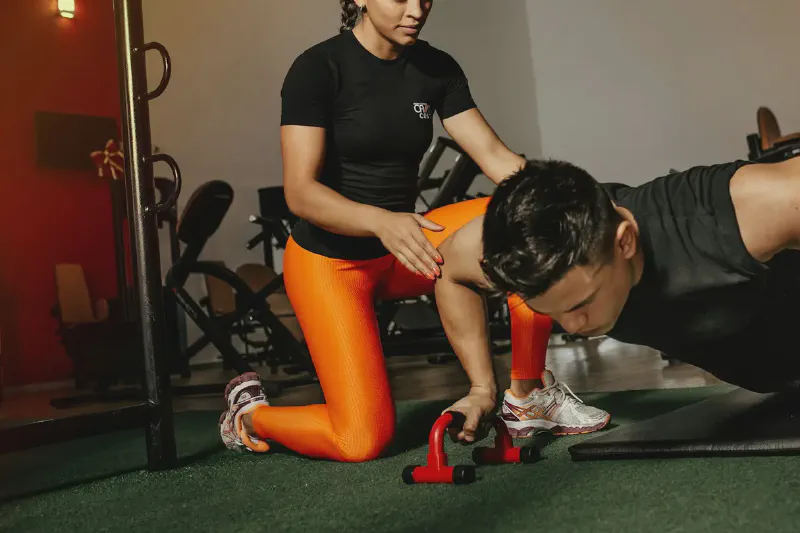
Push-up bars raise your hands from the floor and give you a grip to hold. Some people find that this lets the wrists stay closer to neutral instead of bending backward. They can also make hand placement more consistent, although comfort depends on the bar shape, grip and your own joint position.
Their exercise range is narrower than bands or suspension trainers. You can use them for standard push-ups and variations, and some people incorporate them into plank or pike work, but they are primarily a pressing accessory. They are a sensible choice if push-ups are already a priority, not necessarily the best single purchase for full-body training.
Look for stable bases and handles that do not rotate unexpectedly. Place them on a surface that provides adequate grip, and begin with an incline or knee variation if a full push-up is not yet controlled. A higher handle does not make poor shoulder or trunk alignment safe.
Which compact accessory should you buy first?
Choose resistance bands if you want the greatest range of exercises, the simplest storage and a gradual way to build strength. Choose a suspension trainer if you are comfortable checking an anchor and want a challenging bodyweight routine with plenty of progression options.
Choose an ab roller only if focused core work is your priority and you are prepared to learn the movement patiently. Choose push-up bars if wrist position or push-up practice is the specific reason you are shopping.
The supplier listings below illustrate why it is worth checking the actual format rather than relying on a broad category label. A wrist support brace may complement floor training, but it does not provide resistance or exercise variety.
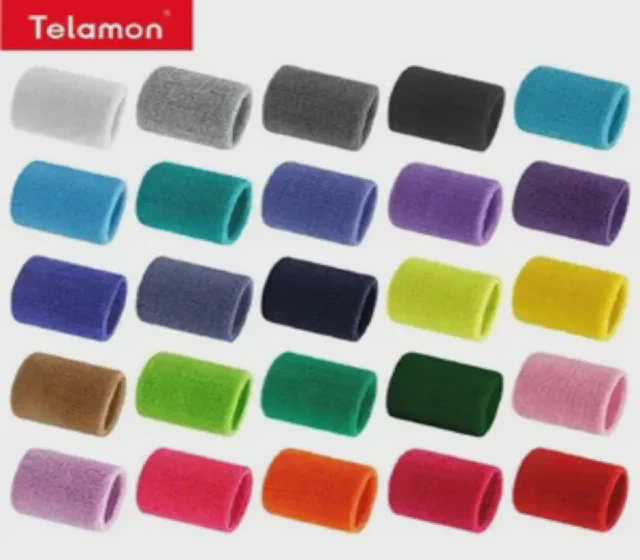
Best Wrist Support Brace Gym for Yoga Lifting Carpal Tunnel CE Approved
- MIC category
- Fitness Accessories
The supplier listing places this wrist support brace in the Fitness Accessories category and describes it for gym, yoga, lifting and carpal-tunnel-related use. It is not a substitute for one of the four training tools compared here, but it may be relevant if wrist comfort is a limiting factor during floor exercises. Treat the intended uses as supplier-listing claims and check fit, adjustability and return terms before buying.
Best for People who want to consider wrist support alongside a compact workout accessory.
- Designed as a wearable support rather than a resistance or strength-training tool
- Potentially relevant to exercises that load the hands and wrists
- Does not add exercise variety or replace proper technique
Confirm before inquiry: A brace cannot diagnose or treat wrist pain. Stop an exercise that causes pain and seek qualified medical advice when symptoms persist.
A plate-loaded machine is a very different proposition from a portable accessory. It may suit a dedicated gym space, but it conflicts with the goal of keeping equipment easy to store and quick to clear away.
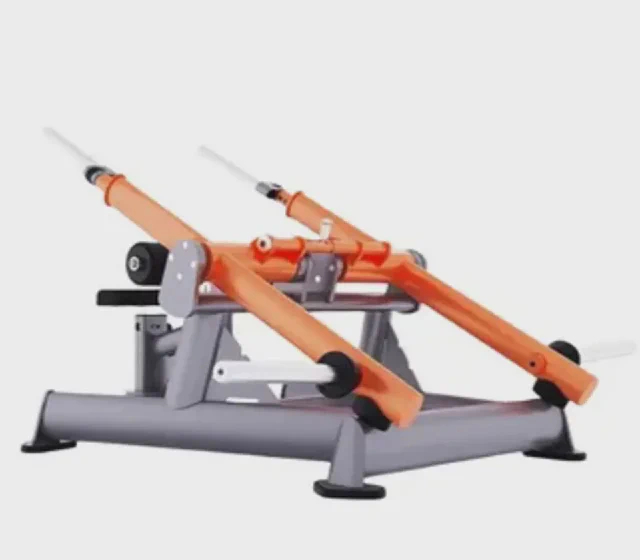
Dips Press Dual System Fitness Equipment Plate Loaded Gym Equipment Dips Press Dual System Machine
- MIC category
- Fitness Accessories
The supplier listing identifies this as plate-loaded gym equipment in the Fitness Accessories category. Its machine format is fundamentally different from a portable band, trainer, roller or push-up bar, and it is unlikely to suit the reader trying to avoid bulky equipment or a permanent home gym. It is included as a useful contrast: category labels do not necessarily indicate a small-space product.
Best for A dedicated home gym user with substantial floor space, not a typical small-room beginner.
- Machine-based format rather than a portable accessory
- Designed around dips and pressing movements
- Requires more space, setup and loading considerations than the compact options in this guide
Confirm before inquiry: The supplier listing does not provide enough verified detail here to assess dimensions, loading limits or home suitability.
A weight plate can be useful when you already own compatible equipment, yet it brings storage, handling and floor-protection questions that bands avoid.
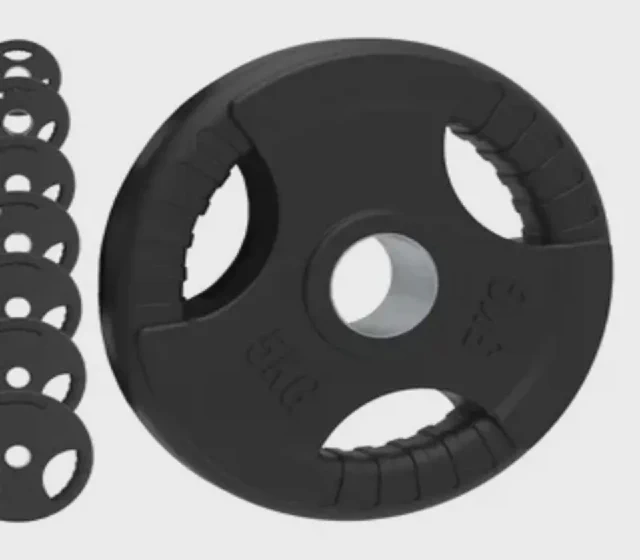
Dx Rubber Coated Cast Iron Bumper Plate for Tri Grip Weight Plates
- MIC category
- Fitness Accessories
The supplier listing describes this as a rubber-coated cast-iron bumper plate for tri-grip weight-plate use. A plate can add resistance to compatible strength equipment, but it is not a standalone answer to the small-home beginner's need for varied workouts. Consider storage, floor protection and compatibility before treating any weight plate as a compact accessory.
Best for Users who already own compatible loading equipment and have a safe place to store weights.
- Weight-plate format for adding external load
- Rubber coating may be relevant to handling and floor-contact considerations
- Less versatile as a first purchase than bands or a suspension trainer
Confirm before inquiry: Confirm plate dimensions, hole size, weight and equipment compatibility with the supplier before ordering.
Make the small space work
Before buying, mark out the area you will actually use. You should be able to lie down, extend your arms and legs, and move without striking a table, wall or ceiling fan. Keep bands and straps away from sharp edges, store plates where they cannot roll into a walkway, and inspect handles, seams and anchors regularly.
A compact accessory is only useful if you can use it consistently. For most beginners, one set of resistance bands plus a clear patch of floor is a more practical foundation than several specialised tools. Add a suspension trainer, ab roller or push-up bars later when you have a clear reason for the extra movement or comfort option.
This article is general fitness information, not medical advice. Start at an easy level, prioritise controlled technique and stop if you feel sharp pain, numbness, dizziness or unusual shortness of breath. If you have an injury, a medical condition or concerns about exercise, consult a qualified health professional before starting a new routine.
This article offers general information, not medical advice. Adjust activity to your experience and seek qualified guidance when needed.
FAQ
What is the best compact fitness accessory for a beginner?
Resistance bands are usually the best starting point because they store easily, support many movement patterns and allow you to adjust difficulty gradually. Choose a set with different resistance levels rather than relying on one very heavy band.
Are suspension trainers suitable for a small apartment?
They can be, provided you have a suitable anchor point and enough clear space to lean away from it. Check the manufacturer's anchoring instructions and avoid attaching a trainer to anything that is not designed to handle the load.
Are ab rollers good for beginners?
They can be useful, but the movement is demanding. Beginners should start with short, controlled rollouts from the knees and stop before the lower back arches or the shoulders lose control.
Do push-up bars protect the wrists?
They may place the wrists in a more neutral position than a flat-palmed push-up, which some people find more comfortable. They do not remove all loading from the wrists, shoulders or elbows, so technique and gradual progression still matter.
How much space do I need for a compact home workout?
You need enough room to lie down, extend your arms and legs, and move without striking furniture. Suspension trainers generally need additional space for leaning and pulling, while bands, ab rollers and push-up bars can be used in a smaller floor area.