A Beginner’s Guide to Stand-Up Paddleboarding
Learn where to start, what safety gear matters and how to stand and paddle on calm water without rushing the process.
Stand-up paddleboarding looks simple from shore, but wind, current and cold water can change the situation quickly. A safe first session is less about standing immediately and more about understanding the location.
Start with local knowledge
Use a supervised beginner session on calm, sheltered water. Ask about wind direction, current, boat traffic, water temperature and local access rules. Offshore wind can carry a beginner away from the launch point even when the water looks flat.
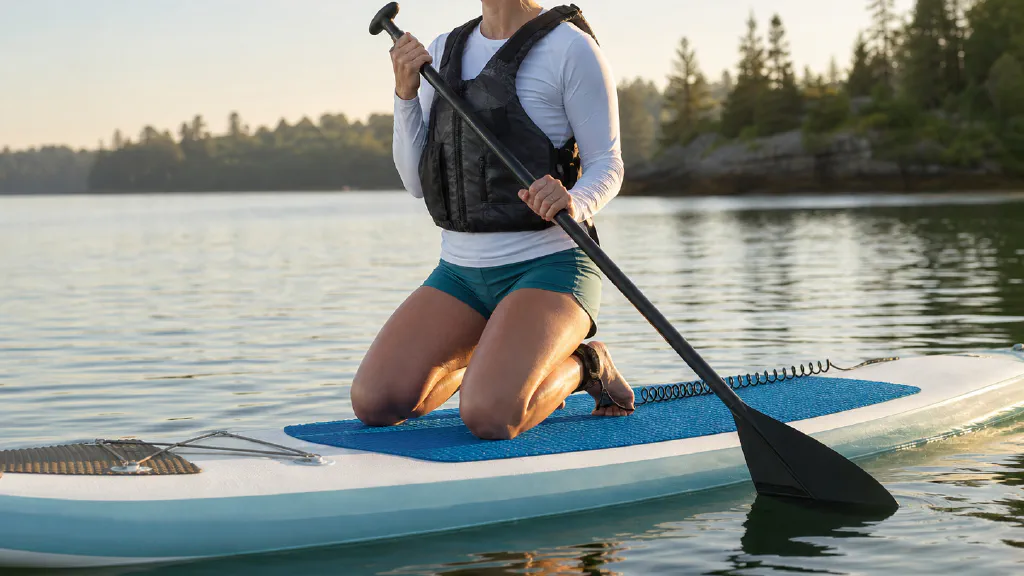
Wear an appropriate personal flotation device. Leash choice depends on the environment: a coiled ankle leash may suit open calm water, while flowing rivers can require a quick-release waist system and specialist instruction because an ankle leash can snag. Follow local guidance.
Set the equipment
Adjust the paddle so it is comfortably above head height according to the paddle design and coaching advice. Check the fin is secure, the board is inflated to its specified pressure and the valve is closed.
Place essentials in a waterproof bag attached to the board. Keep the phone protected and accessible rather than loose in a pocket.
Kneel, move, then stand
Launch in water deep enough that the fin does not hit the bottom. Begin kneeling around the board’s center handle. Practice a few forward strokes and wide turning strokes.
When ready to stand:
- Place the paddle across the board for support.
- Bring one foot at a time to where your knees were.
- Keep feet parallel and about hip-width apart.
- Look toward the horizon and rise gradually.
- Keep soft knees and the paddle in the water for stability.
Falling is normal. Fall away from the board, protect your head and hold on to the paddle if safe. Learn how to climb back on before moving far from shore.
End the first session while you still have energy. Good judgment on the water matters more than standing for a photograph.
This article offers general information, not medical advice. Adjust activity to your experience and seek qualified guidance when needed.