Adjustable Dumbbells vs Fixed Dumbbells: Which Is Better for a Small Home Workout Space?
Comparing adjustable, selectorized, rubber hex and coated dumbbells for storage, setup speed, comfort and beginner-friendly full-body workouts.
If you have limited floor and storage space, choose adjustable dumbbells unless your priority is the fastest possible setup. One adjustable pair can cover presses, rows, squats, lunges and curls without requiring a rack full of fixed weights. Fixed dumbbells are easier to grab and often feel more natural, but even a modest range can quickly occupy a shelf or corner.
That is the basic answer to the adjustable dumbbells vs fixed dumbbells question. The better option depends on how often you change weights, how much room you have and whether you prefer a simple, familiar feel or maximum versatility from one pair.
Adjustable dumbbells: the space-saving choice
Adjustable dumbbells use removable plates, locking collars, a dial or another mechanism to change resistance. For a small home, their main advantage is obvious: one pair can replace several fixed pairs.
That makes them useful for full-body training. Your legs may need more load than your shoulders, while rows and presses may sit somewhere in between. Instead of buying separate light, medium and heavy dumbbells, you can change the load as you move through the session.
There are two broad versions to consider. Plate-based adjustable dumbbells require you to add or remove plates by hand. They are flexible and relatively straightforward, but changing weight takes time. You also need somewhere to place the loose plates, collars and handles so they do not become a trip hazard.
Selectorized dumbbells use a dial, pin or similar selector. They are generally quicker between exercises because the chosen load can be changed without manually removing every plate. That convenience can be valuable in circuits or timed workouts. However, the mechanism can make the dumbbell longer or less balanced than a fixed weight, particularly at lighter settings.
Before choosing an adjustable pair, check how securely the load locks in place and whether the handle remains comfortable at both ends of its range. A dumbbell that saves storage space but feels awkward in every exercise is not a useful bargain.
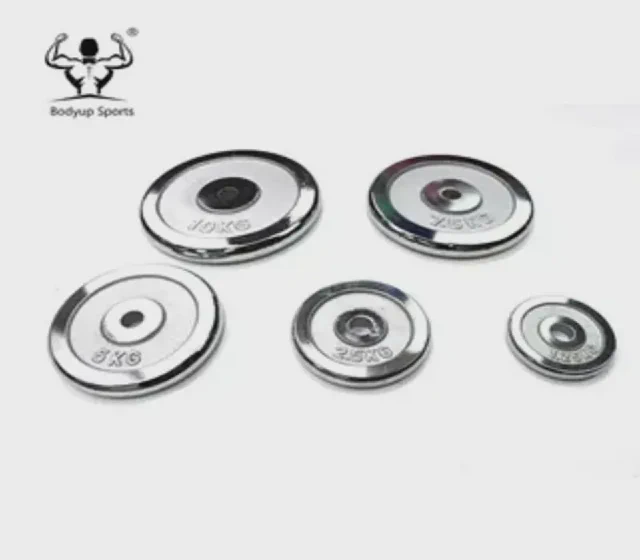
The Chrome Cast Iron Weight Plate is listed in the Dumbbell category by Hefei Bodyup Sports Co., Ltd. As a component rather than a complete dumbbell, it is most relevant to shoppers building a plate-loaded adjustable setup. Plates can make one handle more adaptable to different exercises and strength levels, but they also add setup time and need secure storage when not in use.
Best for Home users who value adjustable loading and do not mind changing plates between exercises.
- Plate-based format can support flexible weight selection
- Chrome cast iron construction is stated in the supplier listing
- Useful for a modular home-gym approach
Confirm before inquiry: The listing is for a weight plate, so buyers should confirm handle, collar and compatibility details before treating it as a complete dumbbell solution.
A plate-based option such as the Chrome Cast Iron Weight Plate is relevant if you want to build a modular adjustable system. It may suit someone who is happy to spend a little longer setting up and packing away after each session. Keep in mind that a plate is not a complete dumbbell: compatibility with handles and collars matters.
Fixed dumbbells: the quickest and simplest option
Fixed dumbbells have a permanent weight, so there is no adjustment mechanism to learn and no loose equipment to organise. Pick up the pair, perform your set and move to the next exercise. That makes them especially appealing for beginners who want a low-friction routine.
They are also useful when workouts involve frequent transitions. A circuit might move from lateral raises to goblet squats, then to rows and floor presses. With several fixed pairs nearby, you can switch instantly and keep your focus on technique.
The disadvantage is storage. A single pair takes little room, but a useful full-body range takes more. You may need a small stand, shelf or dedicated corner, and the weights need to be stored where they will not damage flooring or become a hazard.
Fixed dumbbells can be a good choice if you already know the loads you need, train with a narrow weight range or value simplicity over long-term flexibility. They can also work well as a supplement to adjustable dumbbells: for example, one light fixed pair for warm-ups and an adjustable pair for heavier movements.
Rubber hex and coated dumbbells compared
The material and shape affect the everyday experience more than many beginners expect.
Rubber hex dumbbells are practical in a small room because the hexagonal ends are less likely to roll under furniture or across the floor. They can also be placed on the floor for movements such as renegade rows or supported rows. Rubber may help reduce noise and protect some surfaces, although you should still follow the flooring manufacturer’s guidance and avoid dropping weights.
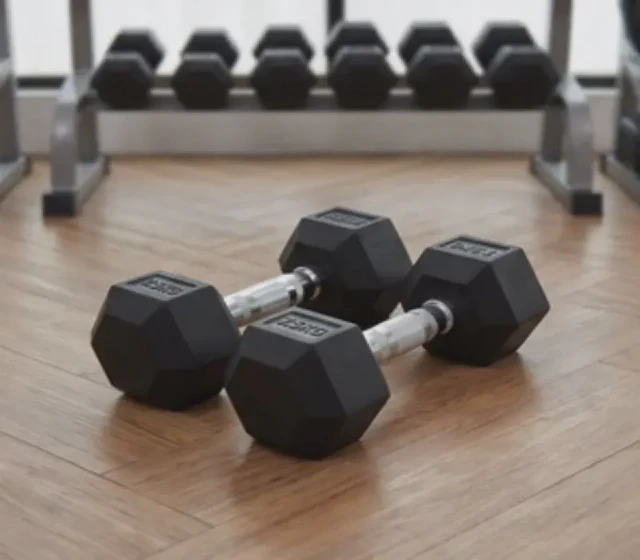
Non-Slip Customizable Iron for Home Gym Workout Rubber Hex Dumbbell
- MIC category
- Dumbbell
The Non-Slip Customizable Iron for Home Gym Workout Rubber Hex Dumbbell is listed by Nantong Duojiu Sporting Goods Co., Ltd. The hex shape is a practical format for home training because it is less likely to roll away between sets, while a rubber exterior can be more floor-friendly than bare metal. It remains a fixed dumbbell, so the space advantage applies to each individual weight rather than to a complete range.
Best for Users who want ready-to-use fixed weights and prefer a dumbbell that stays put on the floor.
- Rubber hex dumbbell format
- Non-slip wording appears in the supplier listing
- Fixed weight is ready for immediate use
Confirm before inquiry: Exact weight, dimensions and rubber specifications should be confirmed from the supplier before purchase.
A rubber hex format such as the Non-Slip Customizable Iron for Home Gym Workout Rubber Hex Dumbbell suits someone who wants a ready-to-use fixed weight with a stable shape. It is a format to consider when setup speed matters more than having every possible load in one pair.
Coated dumbbells are another approachable fixed option. A coating can make the handle or body feel less harsh than bare metal, which may be welcome during lighter exercises and beginner circuits. Coated weights are often associated with lighter training, so they may be less suitable as your only equipment if you plan to progressively load squats, rows and presses.
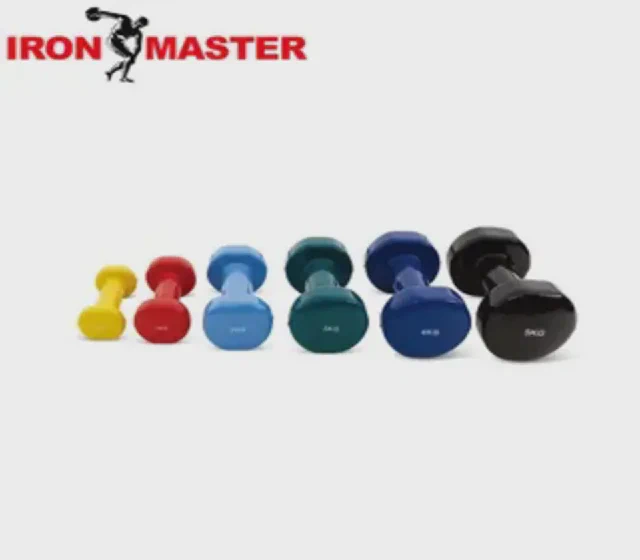
Coated Exercise & Fitness Dumbbell for Home Gym Equipment Workouts Strength Training Free Weights for Women, Men
- MIC category
- Dumbbell
The Coated Exercise & Fitness Dumbbell for Home Gym Equipment Workouts Strength Training Free Weights for Women, Men is listed by Nantong Ironman Sporting Industrial Co., Ltd. A coated fixed dumbbell is simple to grab, comfortable for many lighter movements and less intimidating for a first home routine. Its limitation is the same as any fixed weight: building a broad training range means adding more pairs.
Best for Beginners prioritising a comfortable grip and quick transitions in lighter full-body sessions.
- Coated fixed format
- Listed for home gym and strength-training use
- Simple setup with no weight adjustment between movements
Confirm before inquiry: The supplier listing does not provide enough detail here to assess the coating material, exact weight range or handle dimensions.
The Coated Exercise & Fitness Dumbbell for Home Gym Equipment Workouts Strength Training Free Weights for Women, Men is a sensible format to investigate if comfort and immediate usability are your priorities. Confirm the available weights and dimensions before buying, since those details determine whether it can support your intended full-body routine.
Which format is best for beginner full-body workouts?
For most beginners, the best system is the one that makes consistent training easy. Adjustable dumbbells win on storage and progression. Fixed dumbbells win on simplicity and handling.
Choose adjustable dumbbells if:
- You have room for only one pair or a very small equipment footprint.
- You want to train both upper and lower body with different loads.
- You are willing to pause between exercises to change the weight.
- You expect your strength to improve and want more resistance without buying another complete set.
Choose fixed dumbbells if:
- You want to start each exercise immediately.
- You prefer the feel and balance of a conventional dumbbell.
- You use circuits where fast transitions matter.
- You have enough storage for the specific weights you need.
For a very small space, a selectorized pair is often the most convenient adjustable design. For someone who wants a lower-tech setup and does not mind handling plates, a plate-based system may be more appealing. A compact fixed pair can be the least complicated starting point, but it may eventually be joined by other weights.
A practical setup for a small room
Whichever format you choose, keep the training area clear before the first session. You need enough room to hold the dumbbells at your sides, press them overhead and lower them safely without striking furniture. Store adjustable plates, collars and handles together in one container or on one shelf. For fixed dumbbells, use a stable rack or a low, organised storage area rather than leaving them in a walkway.
Start with movements you can control: a squat variation, a hinge or deadlift pattern, a row, a floor press, an overhead press and a carry. Use a load that lets you maintain steady form and stop before technique breaks down. Increase resistance gradually rather than choosing a heavier weight simply because it is available.
Dumbbells are not automatically safe because they are small. Warm up, keep your wrists neutral where appropriate and avoid holding your breath for long periods. If you have an injury, a medical condition, are pregnant or are unsure whether strength training is appropriate, ask a qualified health professional for individual guidance. Stop if you feel sharp pain, dizziness or unusual shortness of breath.
The verdict
For a beginner with limited home space, adjustable dumbbells are usually the better long-term purchase because they offer several training loads without several pairs taking over the room. Selectorized designs prioritise quick changes; plate-based designs prioritise modular flexibility.
Fixed dumbbells remain the better choice when setup speed, familiar handling and simplicity matter most. Rubber hex models are practical for stable floor storage, while coated models can be comfortable for lighter work. If you are unsure, start with the format you will actually keep accessible: consistent workouts with a modest setup are more valuable than a technically versatile system that stays packed away.
This article offers general information, not medical advice. Adjust activity to your experience and seek qualified guidance when needed.
FAQ
Are adjustable dumbbells better than fixed dumbbells for a small apartment?
Usually, yes. One adjustable pair can replace several fixed pairs and reduce storage demands. The trade-off is that adjustments take longer and some designs feel less natural during exercises such as renegade rows or overhead presses.
What is the easiest dumbbell type for a beginner to use?
Fixed dumbbells are the simplest: choose the weight and start. Selectorized dumbbells can also be straightforward once you understand the adjustment mechanism. Plate-based adjustable dumbbells need more hands-on setup.
Are neoprene dumbbells suitable for full-body workouts?
They can work well for lighter movements, warm-ups and beginner circuits. However, many people outgrow lighter neoprene weights when training legs, back or pressing strength, so they may not be the only pair you need.
How many dumbbell weights does a beginner need at home?
There is no universal number. A single adjustable pair can cover a broad starting range, while a compact fixed set might include two or three light-to-moderate pairs. Choose weights that allow controlled repetitions without compromising form.
What should I check before buying adjustable dumbbells?
Check the adjustment method, the minimum and maximum load, handle length, plate or block clearance, locking security and how easily the pair can be stored. Also consider whether the dumbbells remain balanced at lighter settings.