Adjustable Dumbbells or Fixed Weights: Which Is Better for a Small Home Workout Space?
Comparing adjustable dumbbells, fixed weights, selectorized models and adjustable-weight sets for storage, comfort, setup, progression and value in a small home gym.
If your home workout area is tight, adjustable dumbbells are usually the better choice when you need several weight levels. One pair can cover presses, rows, curls, squats and lighter accessory exercises without filling a cupboard with separate pairs. Fixed dumbbells are better when you value instant setup, familiar handling and a small number of dependable weights.
The right answer depends less on whether one format is universally superior and more on how you train. Consider the space available, how often you change loads, whether you dislike loose parts, and how steadily you expect to progress.
The main options for a small home gym
Traditional fixed dumbbells
Fixed dumbbells are permanently set to one weight. They are the simplest option: pick them up, complete the set and put them down. There is no dial, locking mechanism, plate stack or adjustment base to manage.
That simplicity is valuable for beginners. Fixed weights are easy to understand and quick to use during circuits where you move from one exercise to another. They also tend to feel balanced and familiar because the handle and weight are permanently connected.
The drawback is storage. If you want several weights for different movements, the number of dumbbells grows quickly. A few pairs may fit beneath a desk or on a low shelf, but a broader collection needs a rack or dedicated storage. Fixed weights are most practical when you already know the loads you use regularly or only need a narrow range.
The approved fixed-weight examples illustrate this category. The supplier listing for The supplier listing identifies this as an iron dumbbell set with a rubber hex design. A fixed hex format can be practical for home training because the shape is less likely to roll between exercises, although the space required depends on how many pairs are included. Best for Beginners who want simple, ready-to-use weights and people who prefer not to adjust equipment between sets. Confirm before inquiry: The listing provides the product category and title but does not establish the included weight range, set contents, dimensions or storage method. Confirm those details with the supplier before purchase. The supplier listing describes this as a home-gym dumbbell involving TPU, rubber, iron and cast-weight terminology. It represents the familiar fixed-dumbbell route: uncomplicated to pick up and use, but potentially less space-efficient than an adjustable system if you need many different loads. Best for Home exercisers who value a conventional dumbbell format and expect to keep a small selection of frequently used weights. Confirm before inquiry: The supplied listing facts do not confirm exact weight options, handle dimensions, coating details or whether the product is sold singly or as a pair. Verify the configuration before ordering.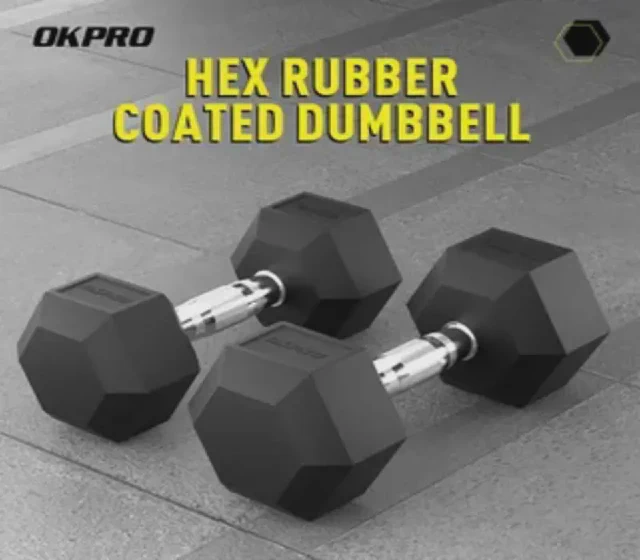
Factory Wholesale Customization Iron Dumbbell Set Gym Equipment Fitness Rubber Hex Dumbbell
View product listing 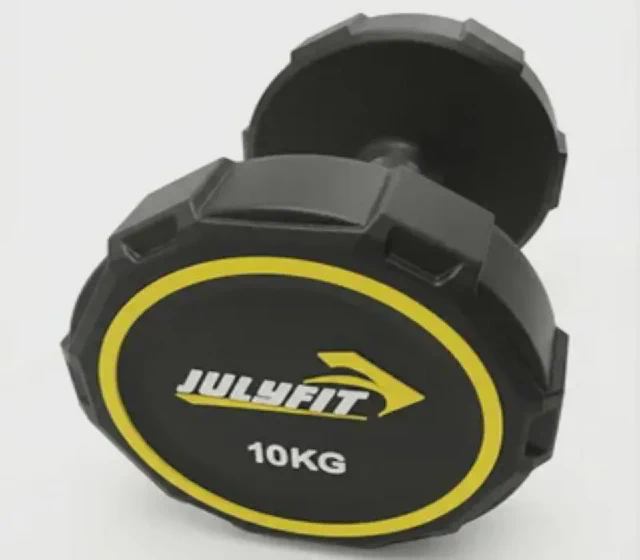
Professional Home Gym Fitness TPU Dumbbell Rubber Iron Cast Weights
View product listing
Adjustable dumbbells
Adjustable dumbbells use one handle or body with selectable plates. Depending on the design, you may turn a dial, move a selector or add and remove plates manually.
Their strongest advantage is storage efficiency. A single pair can replace multiple fixed pairs, which matters in a bedroom, living room or shared office. They can also make progressive training easier because you can increase resistance in smaller steps rather than jumping from one fixed pair to the next.
There are trade-offs. Some models are longer than a normal dumbbell, even at low settings. The added length can affect exercises such as curls, presses and rows, particularly if you train close to your body. You also need a safe place to store the adjustment base and should avoid dropping the dumbbell, as integrated mechanisms may be more complex than a solid fixed weight.
For most people searching for adjustable dumbbells for small spaces, the key question is not simply how many kilograms or pounds the set reaches. Ask whether the lightest setting is genuinely useful, whether the increments suit your progression, and whether the dumbbell remains comfortable at both ends of its range.
Selectorized dumbbells
Selectorized dumbbells are a specific kind of adjustable model. A dial, pin or other selector changes the load from a built-in stack. They are often the fastest adjustable option because you do not need to handle individual plates between exercises.
This speed is useful in circuits and full-body sessions. It also reduces the amount of loose equipment around the floor. However, the mechanism can make the dumbbell wider or longer, and some users may find the balance different from a standard fixed dumbbell. The adjustment base must also sit on a stable, level surface when you change the load.
Before buying, check the adjustment process in the product instructions, the minimum increment, the maximum load and the dimensions at lighter settings. A compact storage footprint does not always mean a compact lifting shape.
Adjustable-weight sets with plates
A plate-loaded adjustable set normally includes handles, plates and collars. You choose the load manually and secure the plates before lifting.
This format can offer flexibility and may be appealing if you want a modular system that is easy to understand. It can also be useful when you want to add plates gradually. The disadvantages are slower transitions, more floor-level parts and a greater need for tidiness. Loose plates can become a trip hazard in a small room, especially if the set is left beside a sofa or under a table.
For a beginner, the best value is not necessarily the set with the widest maximum load. A very heavy system may be awkward for everyday exercises and take up more room than expected. Choose a weight range that supports your current movements and gives you a realistic progression path.
Storage: measure more than the cupboard
Measure the storage area and the workout area separately. A dumbbell may fit on a shelf but still need enough clearance to lift safely. Include the base, plates, collars and any stand in your measurements.
Fixed dumbbells are easier to stack or arrange in a compact rack, but several pairs take up more total volume. Adjustable dumbbells reduce the number of pieces, although selectorized models usually need their matching bases. Plate-loaded sets can be stored in a small box, but only if you are willing to keep the components organized.
A simple rule is to keep weights off walkways and store them where you can lift them out without twisting or reaching awkwardly.
Comfort and setup matter more than specifications alone
A beginner-friendly dumbbell should feel secure in your hand and allow you to maintain a controlled position. Look for a handle that suits your grip, a weight you can lift without compensating, and an adjustment process you will actually use.
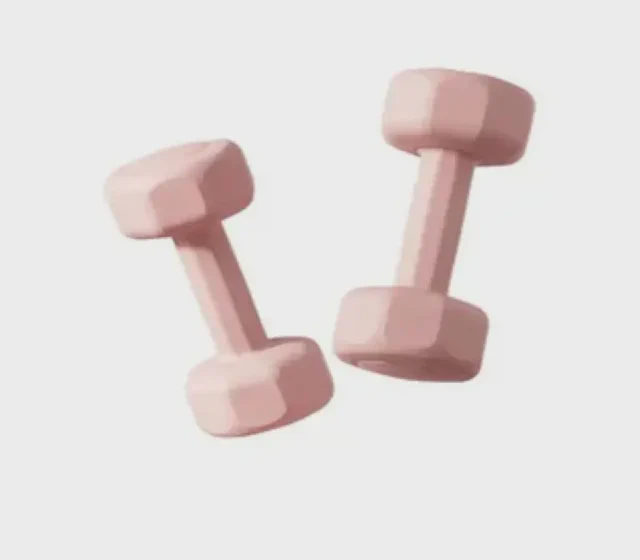
Non-slip features can be helpful, but a secure grip does not mean you should squeeze excessively or train through hand pain. Light hand bells can have a place in low-load routines. The supplier listing for The supplier listing presents these as light, non-slip fitness hand bells for yoga and Pilates. That positioning makes them more relevant to lighter accessory work than heavy progressive strength training, but a small pair can be convenient when storage space and handling comfort matter most. Best for Light upper-body exercises, mobility sessions and beginners who want a compact entry point for low-load training. Confirm before inquiry: The listing does not provide verified weight, dimensions or grip measurements in the supplied product facts. Check the exact specifications and intended use before relying on them for strength progression.
Also consider transition time. If you perform supersets, fixed weights or selectorized adjustables may keep the session moving. If you mainly complete straight sets with long rests, manual plate changes may be less irritating.
Which should a beginner choose?
Choose fixed dumbbells if you need only one or two pairs, want the least complicated equipment and prefer immediate use. They are also a sensible choice for someone who trains with a consistent routine and has enough room for a small rack or shelf.
Choose adjustable dumbbells if storage is the main constraint, you want several resistance levels or you expect your strength to change over time. They are particularly useful for a small home where every additional pair competes with everyday furniture.
Choose a selectorized model if quick changes are important and you are comfortable with a more engineered design. Choose a plate-loaded adjustable set if modularity, manual control and potentially gradual expansion matter more than rapid transitions.
Whichever format you select, start with movements you can control: squats, hinges, rows, presses and carries, using a load that allows sound technique. Increase resistance gradually rather than chasing the maximum setting.
Bottom line
For most beginners with limited storage, adjustable dumbbells offer the best balance of variety and footprint. Fixed dumbbells remain the better everyday tool when simplicity and immediate handling matter more than having a broad range. The smartest purchase is the one that fits your room, your routine and your realistic progression—not the one with the most impressive maximum weight.
Health note: Strength training can involve injury risk. Use equipment according to the manufacturer’s instructions, check that adjustable parts are secured, keep your training area clear and seek advice from a qualified health professional if you have an injury, medical condition or concerns about starting exercise.
This article offers general information, not medical advice. Adjust activity to your experience and seek qualified guidance when needed.
FAQ
Are adjustable dumbbells good for small spaces?
Yes. One pair can replace several pairs of fixed dumbbells, reducing the amount of floor and shelf space needed. Check the storage base, adjustment mechanism and overall length before buying, because some adjustable models are long even at lighter settings.
Are fixed dumbbells better for beginners?
They can be. Fixed dumbbells are straightforward, quick to pick up and easy to understand. A beginner who only needs two or three light-to-moderate pairs may prefer them, while someone planning a wider progression will usually save space with adjustables.
What is the difference between selectorized dumbbells and adjustable-weight sets?
Selectorized dumbbells use an integrated dial, pin or selector to choose the load from a built-in weight stack. Adjustable-weight sets usually use separate plates, collars and handles, so changing weight takes more manual work but may offer a simpler, more modular design.
How many dumbbell weights does a beginner need at home?
There is no universal number. Many beginners can start with one light pair for movements such as raises and one heavier pair for rows, presses or squats. An adjustable pair becomes more useful as the number of exercises and desired progression increase.
Are adjustable dumbbells safe to use?
They can be, provided the adjustment system is used exactly as instructed and the selected plates or weight mechanism are fully secured before lifting. Inspect the equipment regularly, keep it on a stable surface and stop if you experience sharp pain, dizziness or unusual symptoms.